Blog
Plush Toys as Trade Show Swag: Ideas, Strategy and How to Order
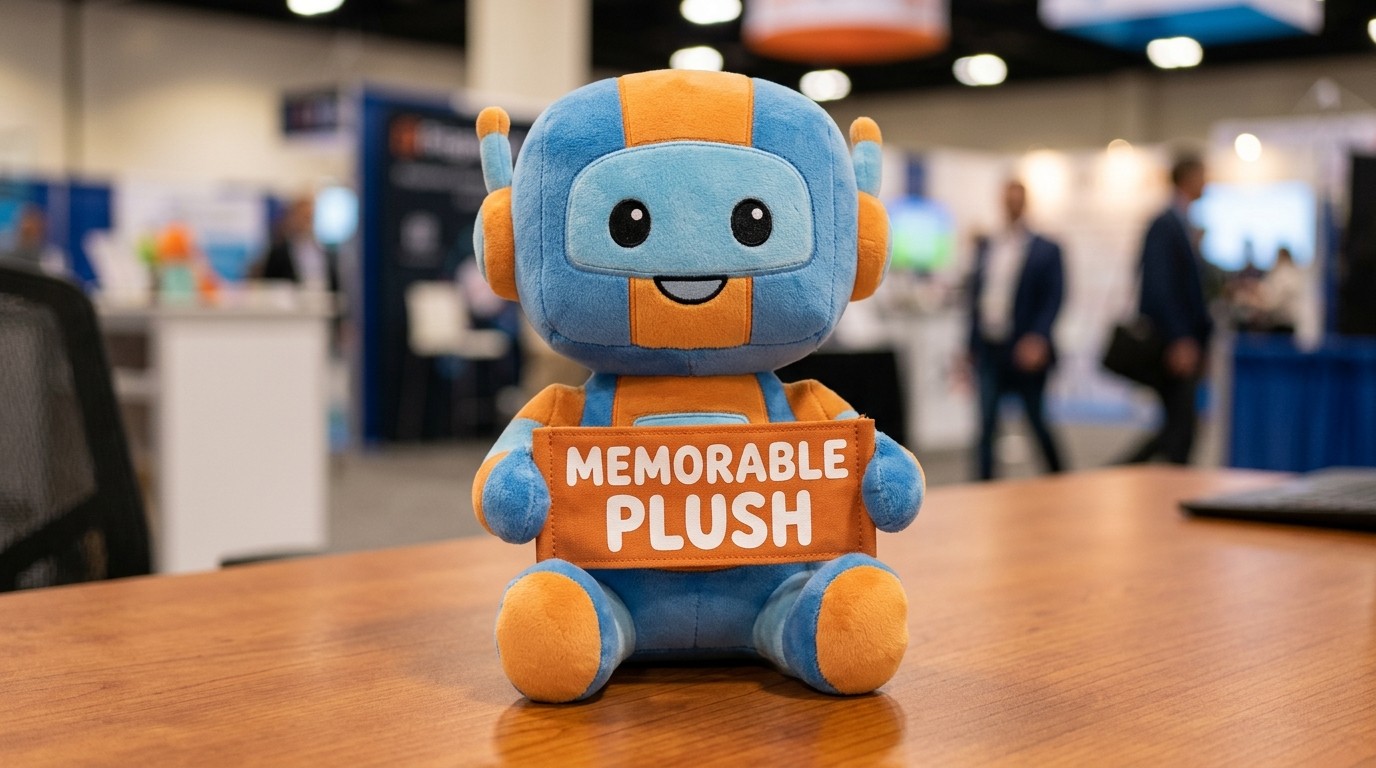
Plush Toys as Trade Show Swag: Ideas, Strategy and How to Order
Walk any major trade show floor and observe what people are actually carrying. The branded tote bags accumulate from every booth and become indistinguishable from each other within the first hour. The pens get pocketed and forgotten. The stickers go on a lanyard or a laptop and fade into the visual noise. Most branded swag at trade shows and conferences performs the same function: it fulfils the expectation of giving something away while creating almost no lasting brand impression.
Custom plush toys break this pattern completely. A well-designed branded plush is visually distinctive in a way that no other swag category matches. People carry them openly, photograph them, and bring them home. They sit on desks and shelves rather than in the bin at the hotel room. And they generate organic social content at events, in airport lounges, and at home, in a way that a branded pen or a USB stick never does.
This guide covers how to use custom plush toys strategically as trade show and event merchandise, what design and format decisions drive the best results, how to budget and plan for a conference timeline, and how to brief a manufacturer to make sure your products arrive on time and on brand.
Kedonia has produced over one million custom plush toys for brands including Disney, Swarovski, SoftBank, and Walmart. Our production takes a confirmed design to products ready to ship in as fast as 30 days. Start at kedonia.com/ai or see full process details at kedonia.com/process-and-pricing.
WHY PLUSH OUTPERFORMS OTHER TRADE SHOW GIVEAWAYS
Trade show swag is evaluated on three dimensions that most marketing teams implicitly apply but rarely make explicit: will people take it, will they keep it, and will it remind them of the brand afterward.
Most branded merchandise passes the first test, people take free things, but fails the second and third. Custom plush toys are unusual in that they pass all three consistently.
People actively seek out distinctive plush giveaways at events. A well-designed branded plush on a booth creates its own draw, with attendees stopping specifically because they want the toy. This converts swag from a passive giveaway into an active traffic driver at your booth.
People keep plush toys. Unlike consumables or generic merchandise, a plush toy has enough perceived value and emotional appeal that most recipients do not discard it. A toy that ends up on someone's desk or in their home continues generating brand impressions for months or years after the event.
And plush toys travel visibly. Attendees who attach a plush charm to their conference bag or lanyard become walking brand ambassadors for the duration of the event. Every person who sees the toy and asks about it is an organic brand impression your booth team did not have to create.
The kidult market, adults purchasing toys and collectibles for themselves, now accounts for over 28 percent of global toy sales. Custom plush at trade shows and conferences arrives at exactly the right cultural moment, when branded plush is not just acceptable for adult recipients but actively desirable. For more context on why adults engage with plush differently than they did five years ago, see kedonia.com/collection/why-plushies-are-taking-over-your-feed-and-your-heart.
FORMAT AND DESIGN DECISIONS FOR EVENT PLUSH
The format of your plush giveaway should match the context of the event and the way recipients will interact with it.
Bag Charm Format
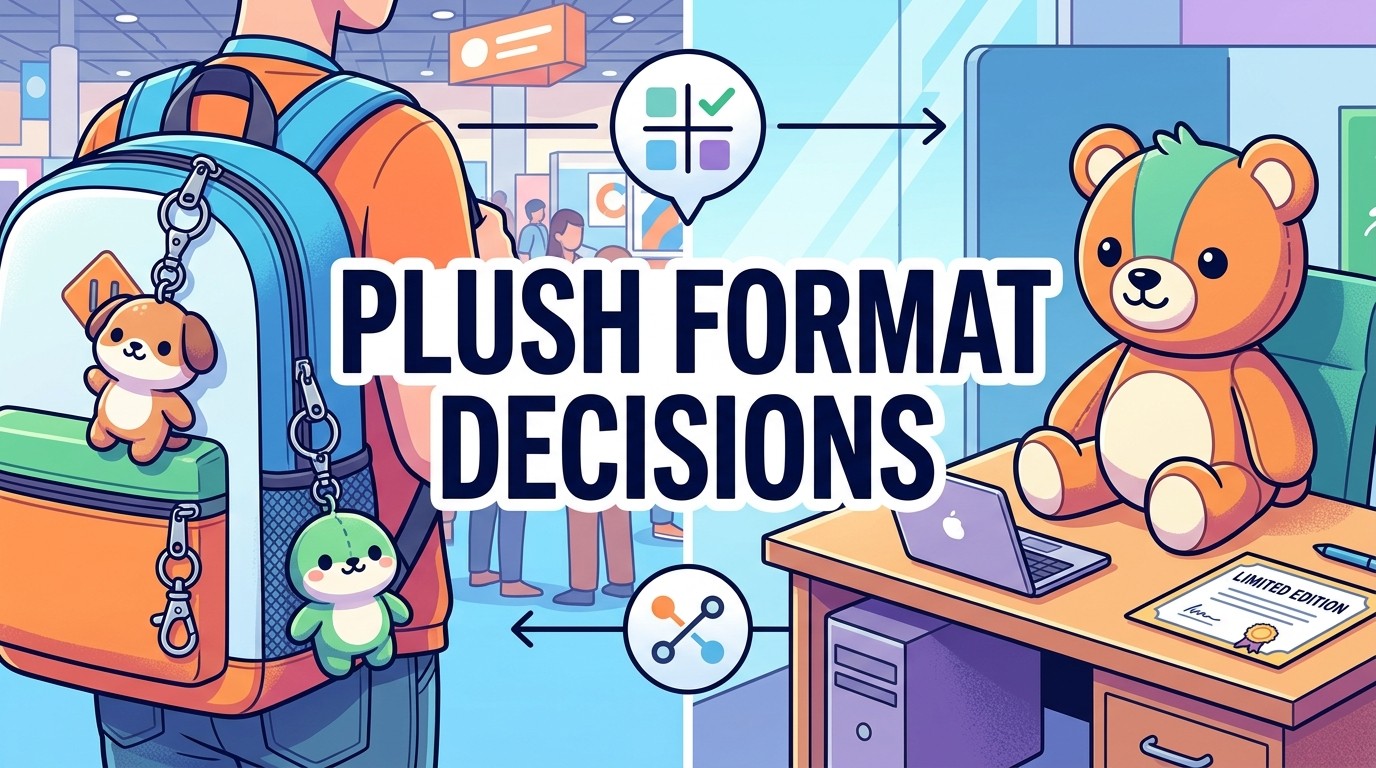
For conference and trade show events, a plush bag charm, between 8 and 12 centimetres with a keyring loop or lobster clasp attachment, is often the most effective format. It is compact enough to distribute easily and carry in a bag without adding significant weight. It attaches visibly to conference bags, lanyards, and laptop bags, creating ongoing brand exposure throughout and after the event. And it is at a price point per unit that works for larger distribution quantities.
Bag charm formats have surged in commercial relevance since the viral rise of plush bag charms in 2024 and 2025, driven by brands including Jellycat, Pop Mart, and major fashion houses. For a detailed overview of the bag charm trend and what it means for brands, see kedonia.com/collection/the-rise-of-bag-charms-from-nostalgic-trinkets-to-fashion-s-must-have-accessory.
Desk Plush Format
A larger desk plush, between 15 and 25 centimetres, works well for premium giveaways, VIP gifting, or events where your audience is a smaller, higher-value group. It has more perceived value than a smaller charm, sits prominently on a desk as a daily brand reminder, and creates a stronger social sharing moment when recipients photograph it.
The trade-off is unit cost and distribution logistics. Larger plush toys cost more per unit and are bulkier to transport to the event venue and distribute from a booth. For very large conferences with thousands of attendees, the bag charm format is typically more practical.
Limited Edition and Numbered Drops
Treating your event plush as a limited edition with a numbered certificate of authenticity or a specific edition label significantly increases perceived value and creates urgency. Attendees who know that only 500 units of the plush exist treat it as a collectible rather than generic swag. This is the same mechanic that makes blind box toys like Labubu commercially powerful applied to branded event merchandise.
For larger conferences where you want to drive booth traffic at specific times, a phased release, distributing the first batch at booth opening and the second batch at a specific presentation or activation, is more effective than a passive all-day giveaway.
Design Principles for Event Plush
Keep the design clean and recognisable. A plush that is immediately identifiable as your brand from a distance works better at an event than one that requires close examination to connect to the brand. Your brand mascot, if you have one, is the natural choice for event plush because the connection to the brand is immediate.
If you are creating an original character for the event, design it to carry a distinctive visual feature that ties it clearly to your brand identity, whether that is a colour, a logo element, an accessory, or a design motif.
Avoid very small features below one centimetre in the design. These are expensive to produce, frequently require additional quality control attention, and add complexity to a project that benefits from clean execution.
BUDGETING AND QUANTITY PLANNING FOR EVENT PLUSH
Budget planning for event plush starts with understanding your target distribution number and working backward from there.
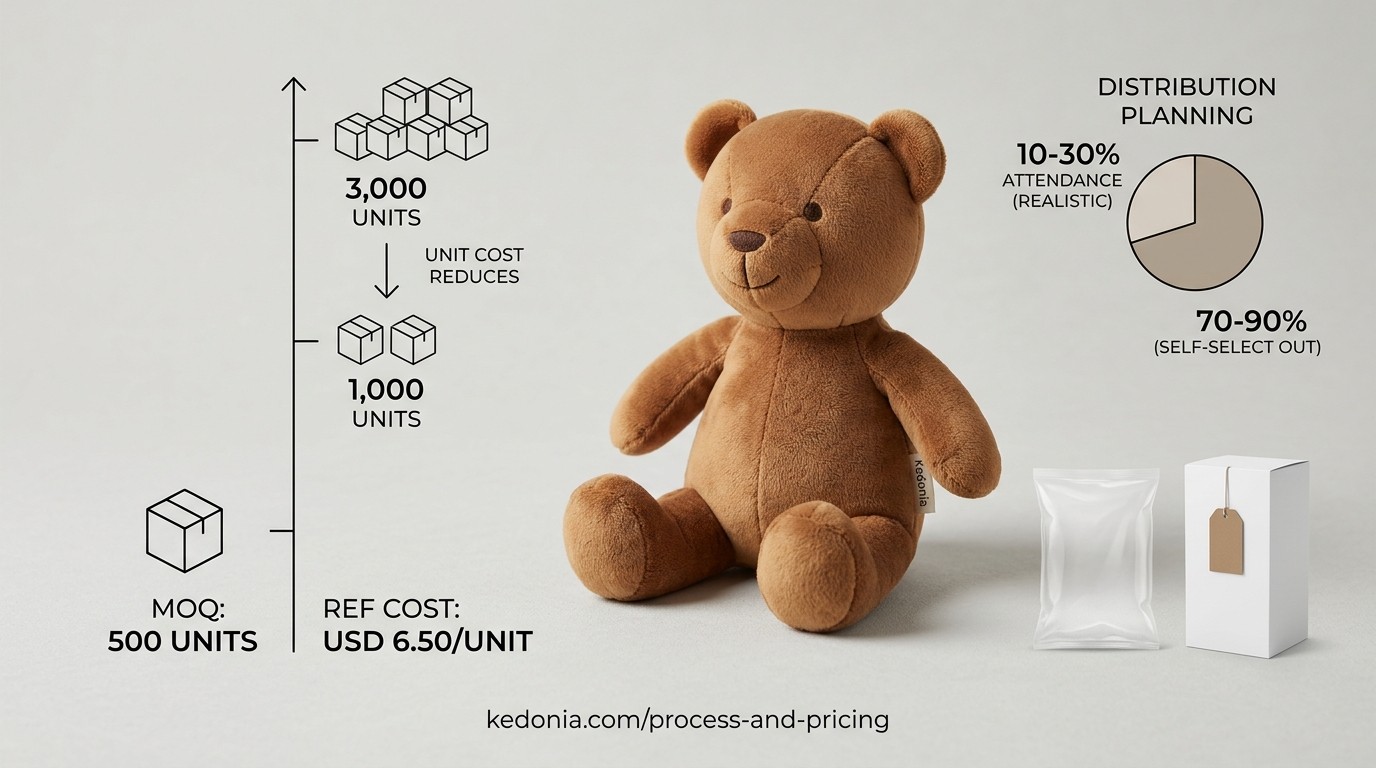
For a trade show or conference giveaway, the realistic distribution quantity is typically ten to thirty percent of the total event attendance, not one hundred percent. Attendees self-select based on interest, and a plush toy that is perceived as desirable will distribute faster than you expect while also creating more organic demand than a generic item.
Kedonia's standard minimum order quantity is 500 pieces per design. This is a practical minimum for most trade show and conference applications. For larger events with attendance in the thousands, quantities of 1,000 to 3,000 units are common, with meaningful per-unit cost reductions at each tier.
Full pricing details and how unit cost changes across quantity tiers are available at kedonia.com/process-and-pricing. Reference pricing for a standard 20-centimetre plush at MOQ is USD 6.50 per unit. Bag charm formats at smaller sizes will differ from this reference.
Budget for packaging alongside the unit cost. For event distribution, individual polybags are typically sufficient and add minimal cost per unit. If you want branded packaging for VIP gifts or a premium event activation, custom boxes with hang tags add cost and require specification at the brief stage, not after production is complete.
TIMELINE PLANNING FOR TRADE SHOW PLUSH
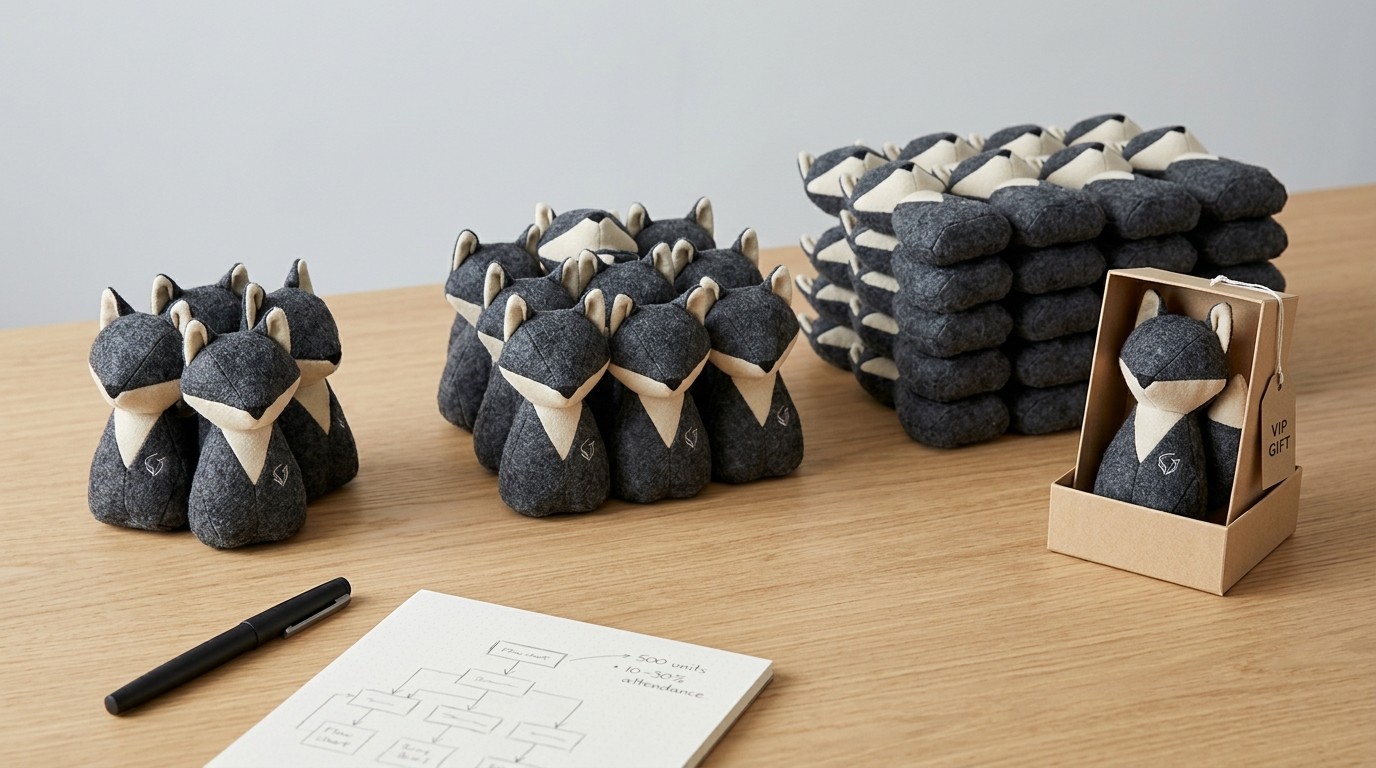
Timeline is where most event plush projects go wrong. Brands frequently approach manufacturers six to eight weeks before an event and discover that the production timeline does not comfortably accommodate both sampling and bulk manufacturing within that window.
The realistic timeline from first brief submission to products delivered runs as follows. Design review and quotation at Kedonia takes two to three business days. Sampling takes approximately five days. Customer review and any refinement rounds add three to seven days. Mass production from confirmed sample takes 30 days. Shipping time to destination varies by region but adds at least one to two weeks for international delivery.
For most event plush projects, a minimum of eight weeks from brief submission to delivered products should be planned. Ten weeks is a more comfortable timeline for first-time projects or designs with multiple revision rounds. If your event has a hard date, communicate it at the first interaction with the manufacturer so they can flag any timeline risks immediately rather than discovering them after sampling has begun.
If you are working with a timeline shorter than eight weeks, discuss this explicitly with Kedonia's team. Rush options may be available depending on order size and production scheduling at the time.
HOW TO BRIEF FOR EVENT PLUSH
Submit your brief at kedonia.com/process-and-pricing with the following information. Your design references including as many angles as available, precise Pantone or HEX colour codes, the intended finished size and format, bag charm or desk plush, the order quantity, the event date and delivery deadline, the delivery destination, and any packaging requirements.
If you do not yet have a design reference, upload your sketch or mascot at kedonia.com/ai and generate a realistic plush concept in under two minutes before submitting your brief. Having a visual reference ready when you submit significantly speeds up the review and quotation process.
For direct project enquiries or to discuss a specific event timeline, contact hello@kedonia.com.
