Blog
How to Brief a Manufacturer for a Brand Mascot Plush
How to Brief a Manufacturer for a Brand Mascot Plush
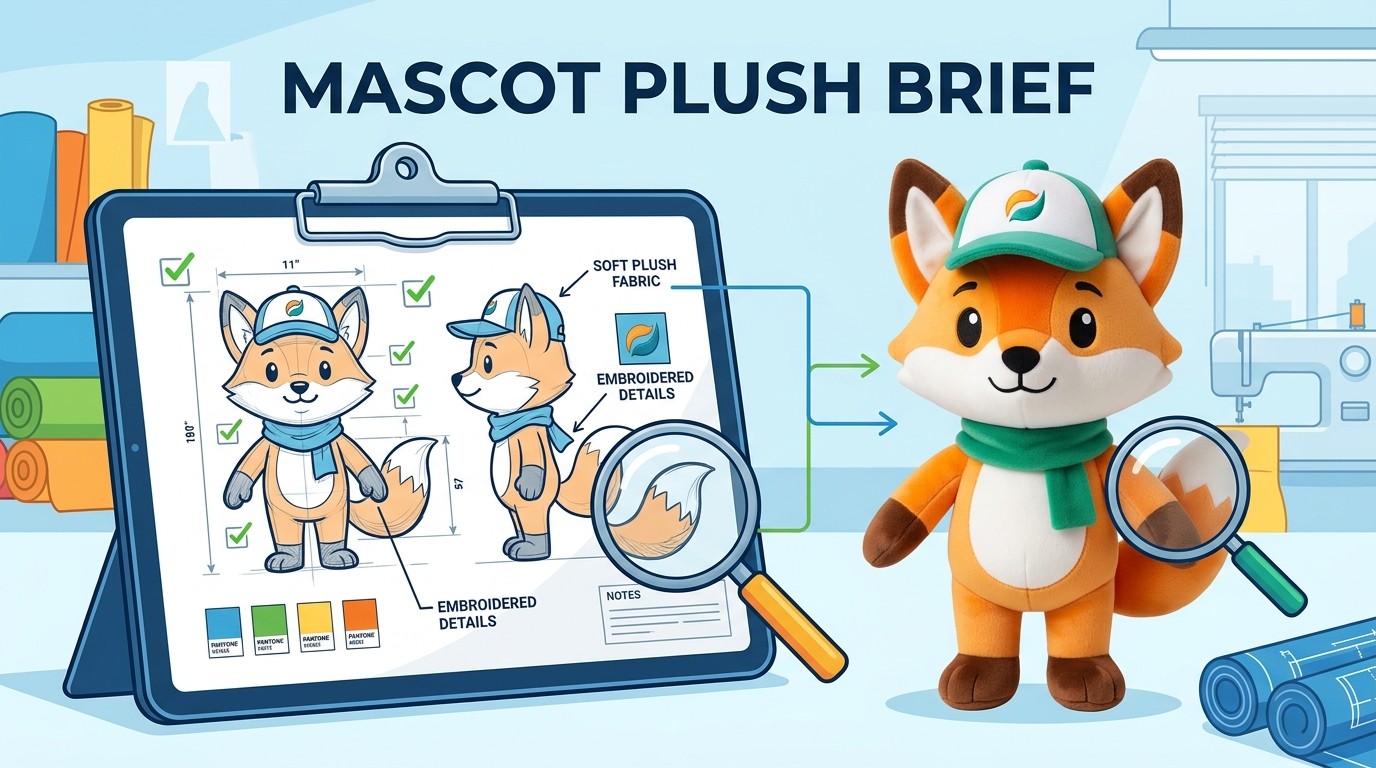
Turning a brand mascot into a custom plush toy is one of the most commercially effective things a brand can do with its visual identity. A physical plush version of your mascot becomes a three-dimensional brand ambassador, something people interact with, photograph, carry, display, and share, in a way that a logo on a screen never achieves.
But it is also the type of project where the brief matters more than almost any other. A mascot plush is not a generic character. It represents your brand's identity, and any deviation from the intended proportions, colours, or personality in the finished product is not just a quality issue, it is a brand consistency issue. Getting the brief right before sampling begins is what separates a mascot plush that builds brand equity from one that creates internal headaches.
This guide covers exactly what a brand needs to prepare, specify, and communicate when briefing a manufacturer for a mascot plush project. It draws directly on Kedonia's experience manufacturing plush for some of the world's most recognised brands.
To see what your mascot could look like as a plush toy before submitting a brief, upload your reference at kedonia.com/ai and receive a realistic concept in under two minutes.
WHY MASCOT PLUSH BRIEFS REQUIRE MORE PRECISION THAN STANDARD BRIEFS
A standard custom plush brief describes a new character. The manufacturer interprets the reference materials and produces a prototype. If it is close to the brief but not exact, revisions are made. The creative direction evolves through the sampling process.
A mascot plush brief is different in an important way. The design is not being created, it already exists. The manufacturer's job is not to interpret a concept but to faithfully reproduce an existing character in three-dimensional plush form, accurately and consistently. This requires a more precise and comprehensive brief, because the standard for success is not general likeness but brand-accurate reproduction.
The most common failure mode in mascot plush projects is a brief that contains excellent 2D references but insufficient guidance on how the character should translate into three dimensions. A mascot that exists primarily as a flat logo, an app icon, or a digital illustration has never been specified in three dimensions before. When a pattern-maker encounters a flat reference for a character with no depth information, they make interpretive decisions about thickness, stuffing shape, and feature depth that may not align with what the brand had in mind. Getting these decisions specified upfront is what makes the difference between a first sample that is immediately recognisable as your mascot and one that requires multiple rounds of revision.
WHAT TO PREPARE BEFORE YOU BRIEF A MANUFACTURER
A Complete Visual Reference Package
Compile every piece of reference material for your mascot before approaching any manufacturer. This should include the official character design in the highest resolution available. It should include every available angle, front, back, left side, right side, and three-quarter views if you have them. It should include close-up references for every distinctive feature, the face, any accessories, any distinctive body markings, and any elements that are critical to the character's recognisability.
If your mascot exists in multiple style variants, animated versus static, simplified logo form versus detailed illustration, specify clearly which variant is the production reference and whether elements from other variants should be incorporated.
If your mascot has never been illustrated in three-quarter or side view because it only exists as a front-facing logo or icon, create these views before briefing the manufacturer. Asking a pattern-maker to infer the depth and three-dimensionality of a character from a single front-facing view is asking them to make creative decisions that belong to the brand. Those decisions should be made by the brand's design team and provided as part of the brief.
Precise Colour Specifications
Provide your brand's official Pantone codes for every colour present in the mascot design. Do not provide colour names. Do not provide colour descriptions. Do not provide digital hex codes as the primary reference without a corresponding Pantone code, because digital colours are screen-dependent and do not translate directly to fabric dye.
If your brand has a physical colour standard, a Pantone textile swatch or a printed brand guideline with certified colour references, include it in your brief. The tighter your colour accuracy requirement, the more important it is to specify it precisely at the outset and to verify colour accuracy at the sample review stage before approving for bulk production.
Proportional Guidance
The proportions of a character change when it is translated from a flat image into a three-dimensional stuffed form. A character with a large round head and small body in 2D illustration will produce a toy where the head appears even larger relative to the body once the stuffing fills out all dimensions.
Specify the proportional relationships that are most important to the character's identity. If the oversized head is intentional and part of the mascot's distinctive look, say so explicitly. If you want the proportions to match the 2D reference as closely as possible, say so, and understand that the manufacturer will need to make specific pattern adjustments to compensate for stuffing expansion.
Providing the target finished size in centimetres, including the height and width and the approximate size of key features like the head, body, and any prominent accessories, gives the pattern-maker quantitative targets rather than qualitative guidance.
Personality and Intended Feel
Every mascot has a personality, and that personality should translate into the physical toy. A mascot that is meant to feel authoritative and premium requires different stuffing firmness, fabric choice, and finishing decisions than one that is meant to feel warm, soft, and approachable.
Describe the intended feel of the finished toy in your brief. Provide a firmness reference if you can, a photo of a toy with similar stuffing density, or a description like "firm enough to hold its shape standing upright but soft enough to feel comfortable to hold." These descriptions help the manufacturer calibrate stuffing weight and fabric selection to match the brand intent.
DURING THE SAMPLING PROCESS: WHAT TO REVIEW FOR A MASCOT
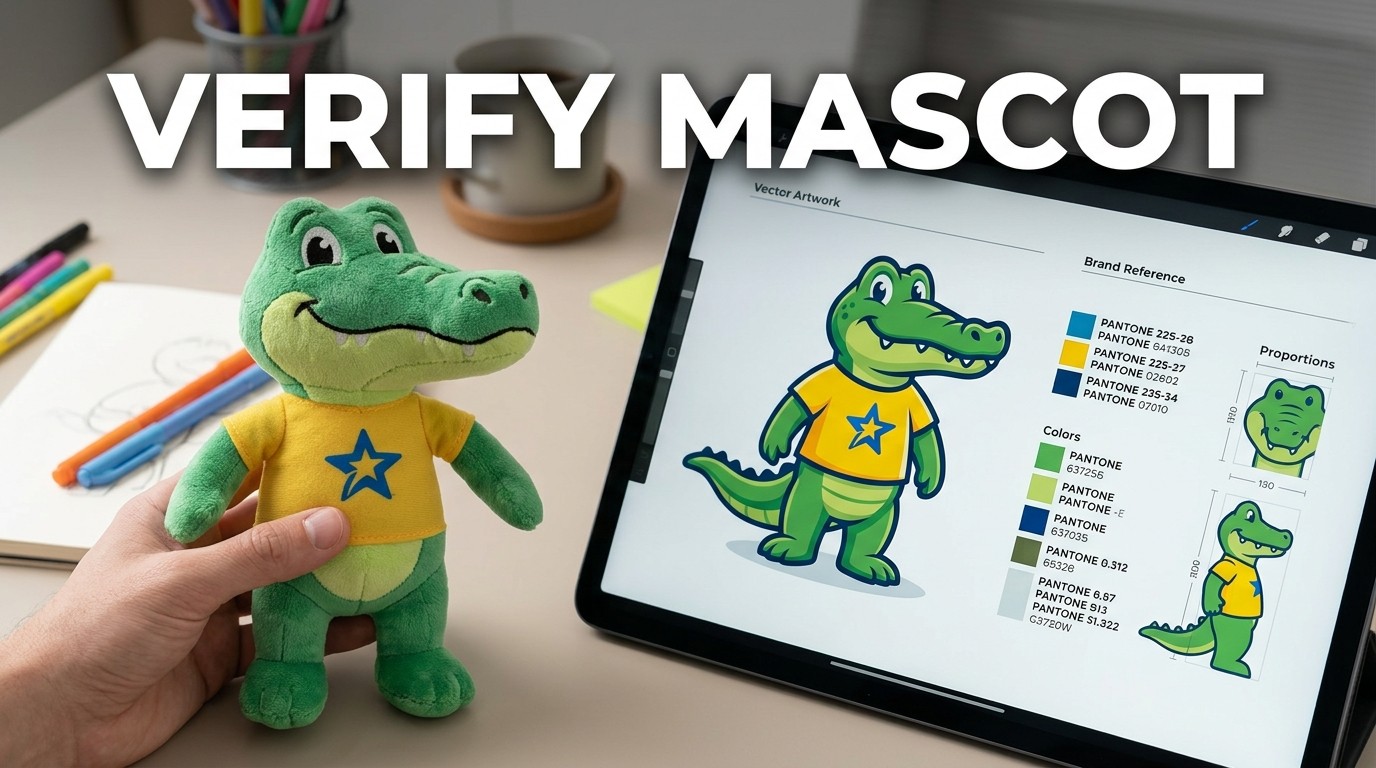
Reviewing a mascot plush sample requires more rigorous attention than reviewing a standard custom plush prototype, because brand accuracy is the primary success criterion.
Evaluate the sample against your official brand references side by side, not from memory. Hold the sample next to a printed or screen-displayed version of the official mascot and compare them directly.
Check colour accuracy under consistent, neutral lighting. Fabric colours can appear different under warm ambient light than they do under neutral daylight. Review under both if possible, because your product will be seen in multiple lighting environments.
Assess whether the character is immediately recognisable as your mascot when viewed from the primary display angle, typically front-facing. If a colleague who knows your brand sees the sample without context, they should identify it as your mascot without prompting. If they hesitate, the brief needs to be more specific about the features that drive recognition.
Check proportions carefully. The elements that make your mascot distinctive, the size of the head, the shape of the body, the position and size of the eyes, should read correctly in three dimensions. Small proportional inaccuracies that are barely visible in a single prototype can create a more noticeable brand consistency issue when you are looking at a production run of hundreds or thousands of units.
Two refinement rounds are included at Kedonia. Use both if necessary to get the sample right. The cost of an additional sampling round is small relative to the brand impact of a mascot plush that does not accurately represent your brand identity at scale.
PRODUCTION CONSISTENCY FOR MASCOT PLUSH AT SCALE
Brand mascot plush projects are often repeat orders. A mascot that works well as a corporate gift or merchandise item gets reordered. This makes production consistency across batches a specific consideration that does not apply to all custom plush projects.
When your first production run is completed and approved, Kedonia documents the full production specification based on that approved standard. This includes the precise fabric specifications, stuffing weight range, embroidery settings, and finishing method. On subsequent reorders, this locked specification is used as the production master, eliminating the need to re-sample or recalibrate for every batch.
This means that the quality investment made at the sampling stage of your first order compounds across every subsequent production run. The more precise the original brief and the more thorough the original sample review, the more consistent every future batch will be.
For a detailed guide to the sampling process and what to check at every stage, see kedonia.com/collection/custom-plush-toy-sampling-process-explained.
PROTECTING YOUR MASCOT IP DURING MANUFACTURING
Before sharing your mascot design files with any manufacturer, take steps to protect your intellectual property. Your mascot is a brand asset with real commercial value, and the risks of sharing it without appropriate protection in place are real.
At Kedonia, all designs shared through our platform are treated as confidential from the moment of upload. We never share client design files with third parties and we are happy to sign a non-disclosure agreement before sampling begins.
For a comprehensive guide to protecting your IP when working with any manufacturer, including registration, NDAs, and IP assignment clauses, see kedonia.com/collection/protect-your-intellectual-property-and-designs-a-comprehensive-guide-for-creators-and-businesses.
START YOUR MASCOT PLUSH PROJECT
Upload your mascot reference at kedonia.com/ai to see it as a realistic plush concept in under two minutes. Then submit your full brief at kedonia.com/process-and-pricing to begin the production process.
For direct project enquiries, contact hello@kedonia.com. Kedonia has manufactured plush for some of the world's most recognised brands and understands the precision that mascot reproduction requires.
