Blog
How AI is Transforming Custom Plush Design for Brands
How AI is Transforming Custom Plush Design for Brands
Custom plush design used to follow a fixed and time-consuming path. A brand would brief an in-house designer or hire a freelance illustrator to develop a character concept. The illustrator would produce multiple rounds of sketches across several weeks. The approved sketch would then go to a manufacturer who would interpret it into a paper pattern and produce a physical prototype. If the prototype did not match the vision, the cycle would restart. From first conversation to physical sample in hand, the process often took six to ten weeks before a single unit was committed to production.
For brands operating in markets where trends shift in weeks and seasonal windows are measured in days, that timeline is a structural problem. By the time the product is ready, the moment it was designed for may have passed.
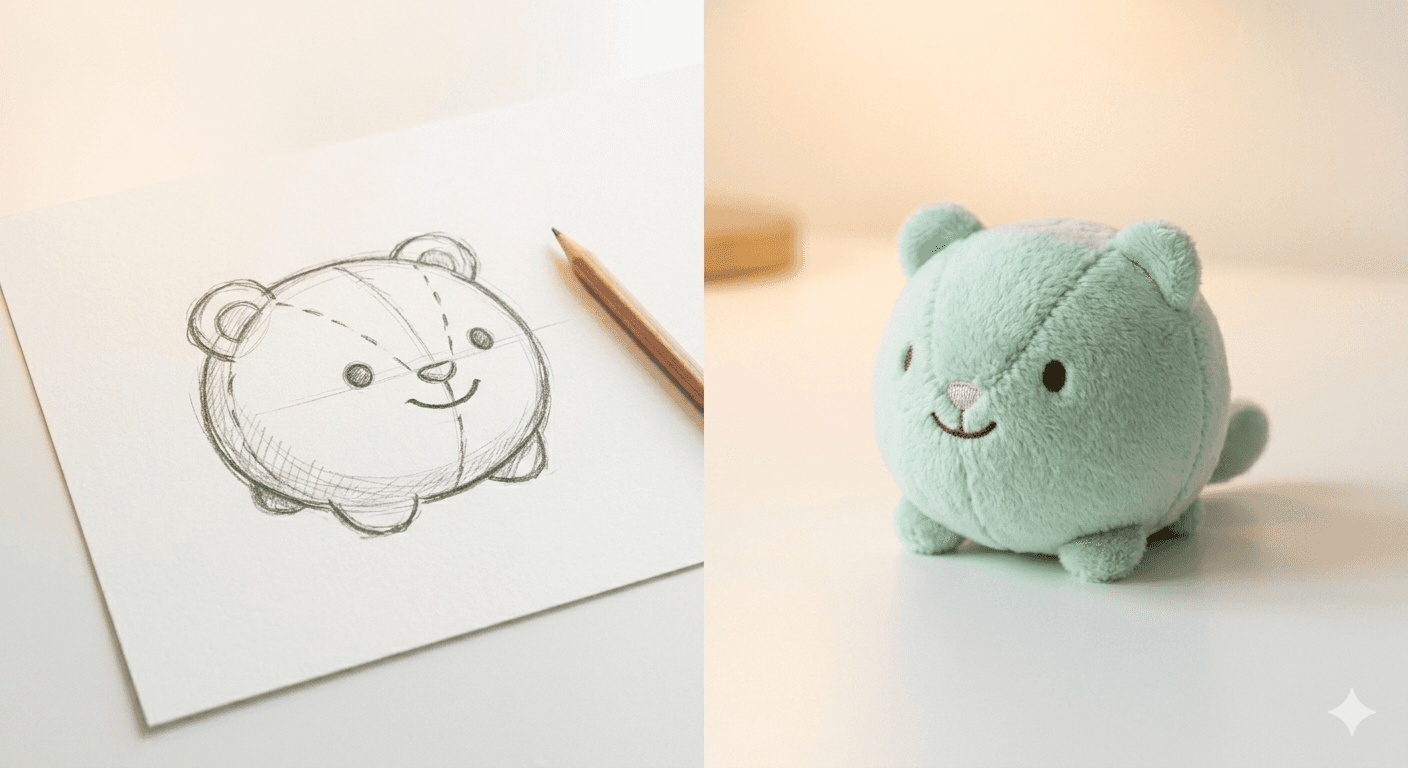
AI-powered design tools are changing this, not by replacing the craft of manufacturing, but by collapsing the time and cost between a brand's first idea and a production-ready design reference. At Kedonia, our AI design platform lets any brand, creator, or merchandise buyer upload a sketch, a doodle, or a reference image and receive a realistic plush concept in under two minutes.
This guide explains how AI plush design tools work, where they deliver the most value for brands, and what the practical limitations are that every buyer should understand before adopting them into their product development process.
Try the Kedonia AI design tool at kedonia.com/ai.
WHAT AI PLUSH DESIGN TOOLS ACTUALLY DO
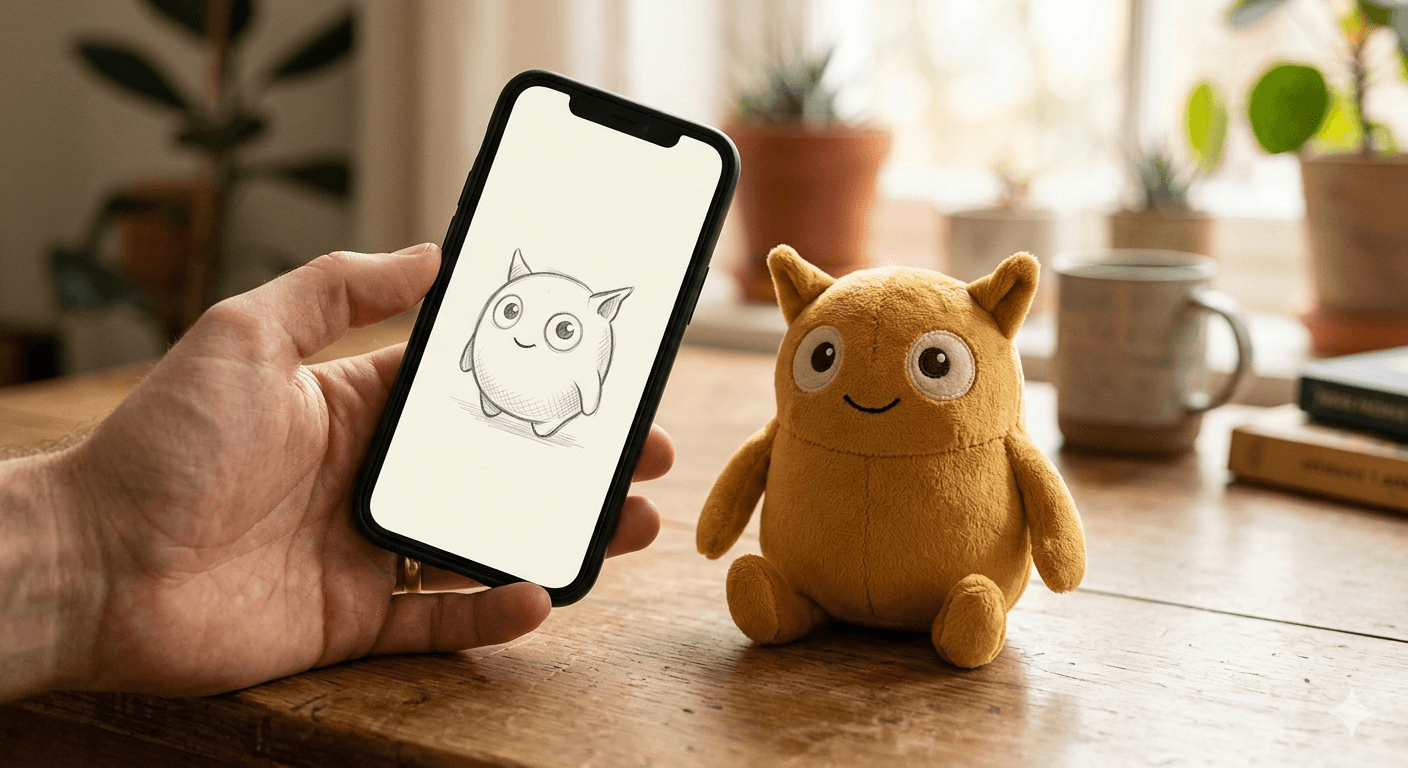
An AI plush design tool takes a two-dimensional image input, anything from a rough sketch to a photograph to a digital illustration, and generates a realistic visual representation of what that design would look like as a physical plush toy. The output is a rendered image that shows the character or object in plush form, with texture, dimensionality, and material qualities that approximate how the finished toy would appear in production.
This is distinct from traditional 3D rendering, which requires skilled software operators, specialist programs, and hours of detailed modelling. AI design tools operate on image-to-image generation principles that allow non-technical users to produce useful design references quickly and without specialist skills.
For brands, the practical value of this is significant. It means that the person who originated the character concept, whether that is a marketing manager, a creative director, a content creator, or a founder, can see what that concept looks like as a plush toy before any manufacturing cost is incurred. This changes the design approval process fundamentally.
Instead of briefing a design team, waiting for concepts, reviewing illustrations, requesting revisions, approving final artwork, and then waiting for a physical prototype, the concept can be visualised in minutes and the brief can be built around a concrete visual reference rather than a written description. The manufacturer receives a clearer brief. The prototype is more likely to match the intent on the first round. The overall timeline from concept to approved sample compresses significantly.
WHERE AI DESIGN DELIVERS THE MOST VALUE FOR BRAND TEAMS
Speed in Trend-Responsive Product Development
The plush category is increasingly driven by cultural moments, viral characters, limited drops, and collaborations that have short windows of peak relevance. A brand that can go from concept to production-ready design reference in a day has a meaningful competitive advantage over one that needs three weeks of design iteration before it can even brief a manufacturer.
Kedonia's AI tool produces a plush concept from any uploaded image in under two minutes. This means a brand team can evaluate ten different character directions in a morning, select the strongest, and have a production-ready design brief submitted to a manufacturer on the same day. For context, the same process through traditional design channels would take days to weeks.
Reducing Sampling Costs Through Better Briefs
Physical samples at Kedonia cost US$200 per round. Every additional round adds time and cost to the production schedule. The most common cause of multiple sampling rounds is a brief that is unclear or incomplete, leaving the manufacturer to interpret details that then need to be corrected when the prototype does not match the brand's expectation.
An AI-generated design preview gives both the brand and the manufacturer a shared visual reference for the intended outcome. Instead of briefing from a sketch that may be ambiguous on proportions, material feel, or feature placement, the brief can be anchored to a rendered image that shows what the plush version of the design should look like. Fewer interpretive gaps means fewer revision rounds.
Accessibility for Non-Designer Founders and Creators
The traditional design-to-manufacture path required either in-house design resources or the budget to hire external illustrators. This created a meaningful barrier for independent creators, small brands, and founders whose core skill is not visual design.
AI design tools remove this barrier entirely. You do not need to know how to draw, use design software, or communicate in technical manufacturing terminology. You need an idea and an image, even a rough one, and the AI tool translates it into a plush concept that can be used as a production brief.
This is particularly relevant for the growing segment of content creators, YouTubers, streamers, and social media creators who have highly engaged audiences and genuine demand for branded merchandise, but lack the design infrastructure that larger brands have access to. The combination of an AI design tool and a manufacturer with a flexible MOQ makes it possible for an individual creator to bring a custom plush character to market in a way that was not practically accessible five years ago.
Faster Iteration for Seasonal and Limited Edition Products
Brands that run seasonal drops, limited editions, or character collaborations need to move through concept and approval cycles faster than standard product development timelines allow. An AI design platform compresses the concept evaluation stage dramatically by making it possible to visualise multiple design directions quickly without committing design resource or manufacturing budget to any of them until a clear winner is identified.
A brand planning a holiday character collection can evaluate five different character concepts in an hour using the AI tool, select the two strongest, and have samples ordered that same week. The same process through a traditional design agency would consume most of the available pre-season lead time before manufacturing even began.
WHAT AI DESIGN TOOLS DO NOT REPLACE
Understanding the limitations of AI plush design tools is as important as understanding their value.
AI-generated design references are visualisations, not production specifications. They show what a design concept might look like as a plush toy. They do not determine or specify the fabric type, pile length, embroidery density, stuffing weight, seam positioning, or any of the other technical variables that define the actual manufactured product. These are determined by the manufacturer during the pattern-making and sampling process, informed by the design reference and the brief.
AI tools also cannot guarantee that a generated concept is manufacturable at a specific price point, size, or MOQ. A design that looks clean and simple in an AI render may involve construction challenges that affect cost and timeline in production. The manufacturer's review of the brief, including the AI-generated reference, identifies these issues before sampling begins.
And AI design tools do not replace the physical sample. No matter how accurate an AI-generated plush concept appears on screen, there are qualities of a physical toy, how it feels, how the fabric catches light, how the stuffing distributes in three dimensions, that cannot be evaluated from an image. The physical sample remains the essential quality checkpoint before bulk production begins.
HOW KEDONIA'S AI DESIGN TOOL WORKS IN PRACTICE
Kedonia's AI design platform is built specifically for the plush design context. It is not a generic AI image tool applied to toy design. It is trained to understand the visual language of plush manufacturing and to produce outputs that are practically useful as production references.
To use it, you upload any image at kedonia.com/ai. This can be a rough sketch on paper, a doodle on a phone, a digital character design, or a photograph of a reference object. The AI processes the input and generates a realistic plush concept within two minutes. The output shows the character or object in plush form with the textures, proportions, and material qualities of a real manufactured toy.
You can then use that generated concept as the anchor for your production brief, which you submit alongside your design references at kedonia.com/process-and-pricing. Our team reviews the brief, comes back with any clarifying questions, and provides a formal quote including sampling cost, bulk unit pricing, and production timeline.
The AI tool is free to use and requires no commitment. It is designed to answer the question "what would this look like as a plush toy" before any cost is incurred, and to give brands and creators the confidence to brief a manufacturer with a clear visual reference rather than a description.
THE BROADER SHIFT: WHY BRAND TEAMS ARE ADOPTING AI DESIGN
The adoption of AI design tools in brand merchandise development is part of a broader shift in how product teams are working. The expectation of speed has increased across every category. The cost of generating a design concept has dropped dramatically. And the gap between an idea and a tangible product reference has narrowed to the point where real-time iteration, testing multiple directions before committing to any, is now possible in a single working session rather than across a multi-week design cycle.
For the plush category specifically, where cultural relevance and timing are significant commercial factors, this shift matters more than in slower product categories. Brands that can act on a moment, a trending character, a viral aesthetic, a limited collaboration, before the moment passes, capture value that brands operating on traditional design timelines cannot access.
AI design tools are the first step in a faster production chain. Kedonia's combination of an AI design platform and a 30-day production timeline, from confirmed sample to products ready to ship, is designed specifically to give brands the speed they need to operate in this environment.
Try the AI design tool at kedonia.com/ai. For production enquiries, visit kedonia.com/process-and-pricing or contact hello@kedonia.com.
