Showcase
Duffy & Friends: How Kedonia Delivered 100,000+ Units for The Walt Disney Company
Client: The Walt Disney Company
Product line: Duffy & Friends plush collection
Distribution: Hong Kong Disneyland, Disney Store
Volume: 100,000+ units produced
Result: Bestseller at Disney Store in 2024; reordered three times within the year; defect rate reduced from an elevated early-run level to under 2%
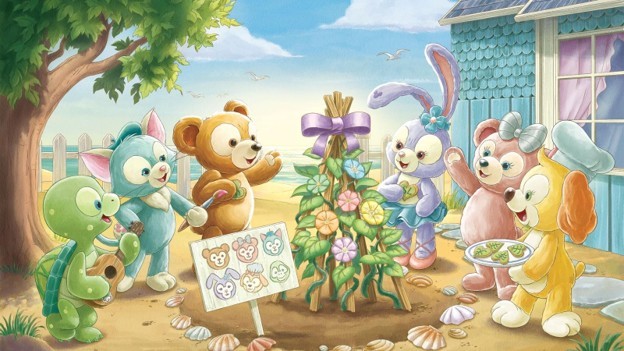
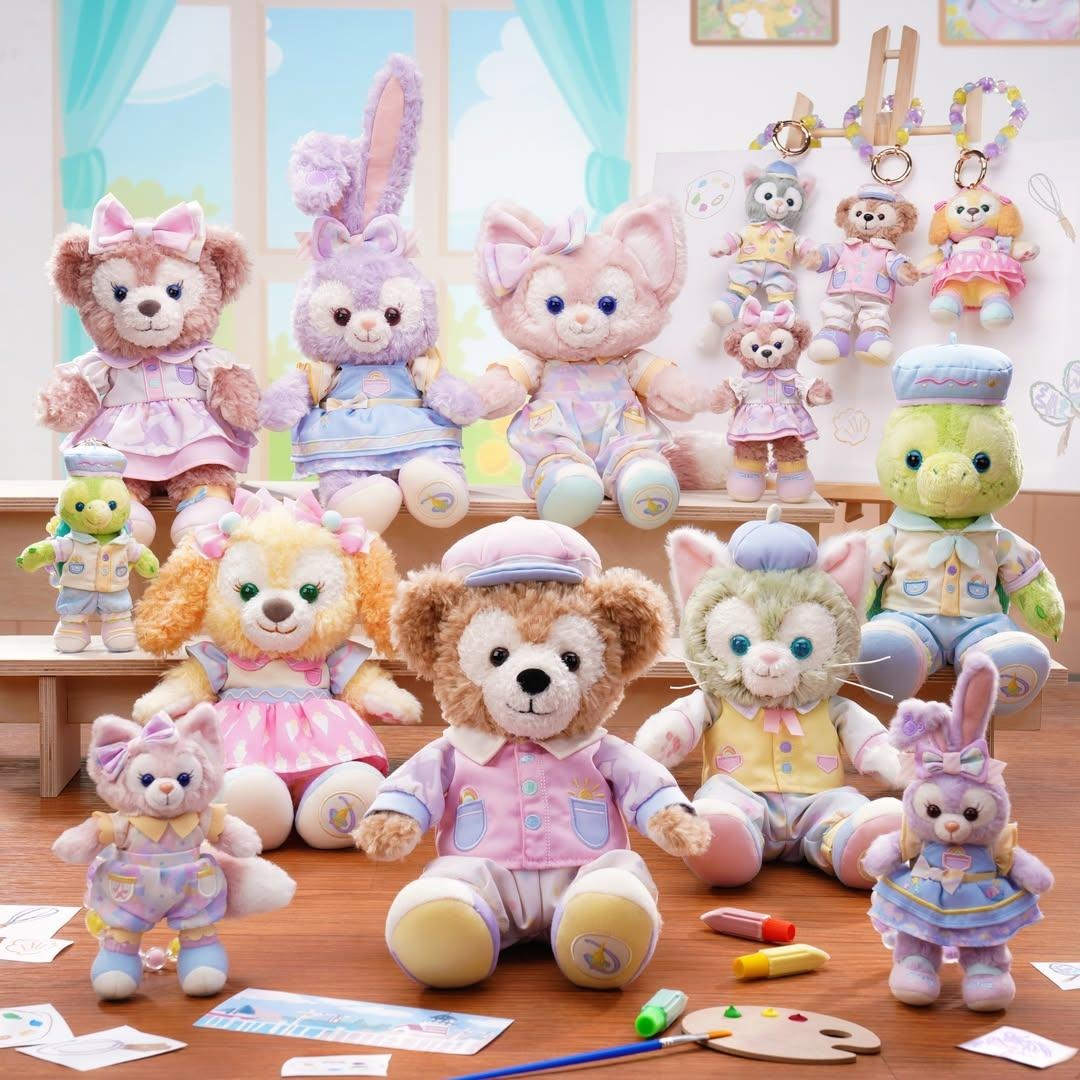
Duffy & Friends (originally "The Disney Bear") is one of Disney's most collected plush franchises. Duffy is a teddy bear created by Minnie Mouse to keep Mickey Mouse company during his sea voyages. Since debuting at Disney parks in 2002, the franchise has grown into an ensemble cast, each character built around its own personality and backstory:
ShellieMay — Duffy's adventurous girlfriend bear
Gelatoni — a cheerful cat who paints with his tail
StellaLou — a lavender rabbit who dreams of dancing on Broadway
CookieAnn — a yellow dog inventor with a keen nose
'Olu Mel — a music-loving green sea turtle
The line is especially popular at Asian Disney parks — Tokyo DisneySea, Hong Kong Disneyland, and Shanghai Disneyland — where fans seek out exclusive plush toys, mascot charms, seasonal outfits, and limited editions. Kedonia partnered with The Walt Disney Company to manufacture the Hong Kong Disneyland run of this collection, producing over 100,000 units that went on to become one of the top-selling items at Disney Store in 2024.
Background
Duffy & Friends isn't a single character — it's a tightly unified multi-character family that Disney continually expands with new characters, seasonal outfits, and limited editions.
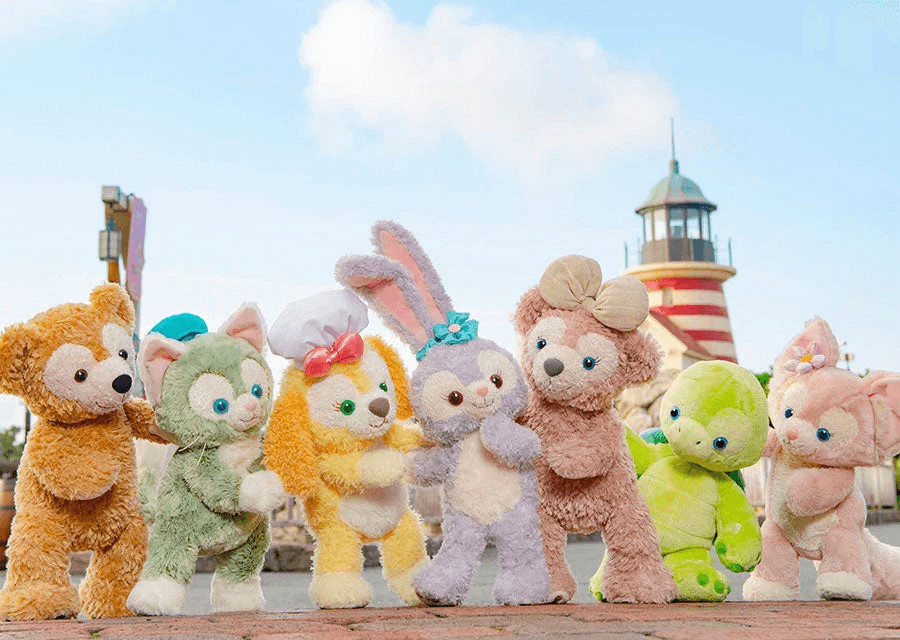
Collectors don't just buy one plush; they build a set, and they scrutinize every new piece against what they already own:
Does the new character feel like it belongs with the ones I already own?
Do the existing and new products look harmonious side by side?
Do the details hold up under close-up inspection?
Because Duffy & Friends buyers are high-frequency repeat purchasers rather than one-time customers, any small deviation gets noticed and magnified fast. The challenge isn't producing one good batch — it's holding the exact same look and feel across generations of new releases, at a scale of six figures.
The Challenge: Multiple Constraints Inside One Small Plush
1. The character system outranks any single product
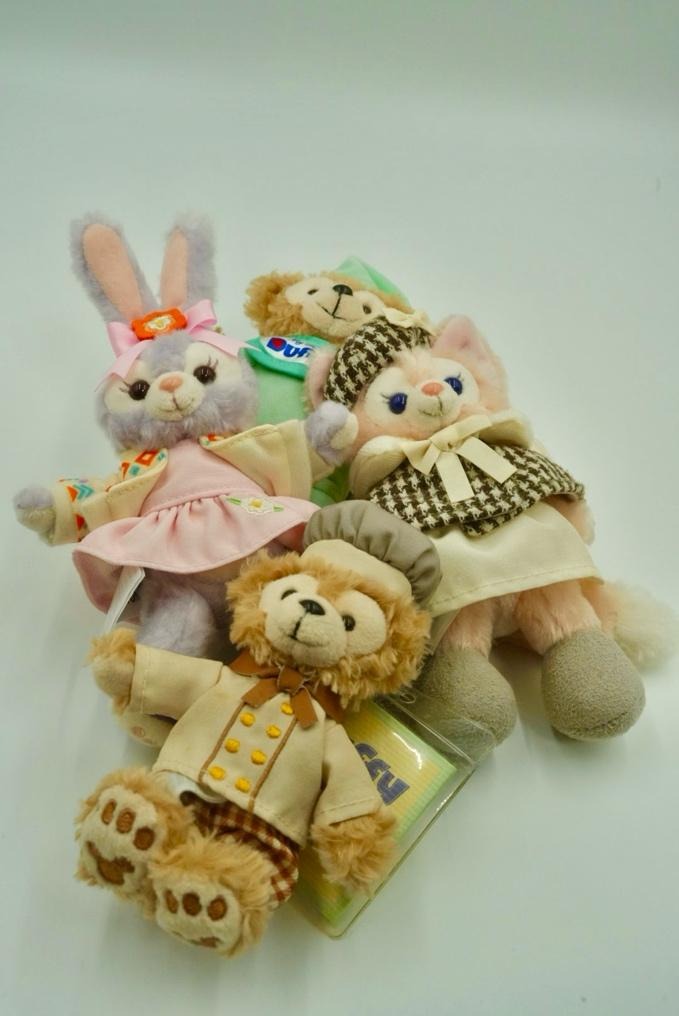
We didn't treat each commissioned character as an isolated piece. Instead, we treated the entire lineup as one unified character system, which meant locking in a set of consistent (if unwritten) standards across every character:
The acceptable range of head-to-body proportions
Proportional — not fixed — spacing for facial features
A consistent softness/firmness standard for the plush body
Center of gravity for both standing and sitting postures
2. Small size raises the difficulty, it doesn't lower it
A large share of the Duffy & Friends line is small-scale plush and keychains. Counterintuitively, smaller size makes manufacturing harder, since the margin for error shrinks. Three areas required extra precision:
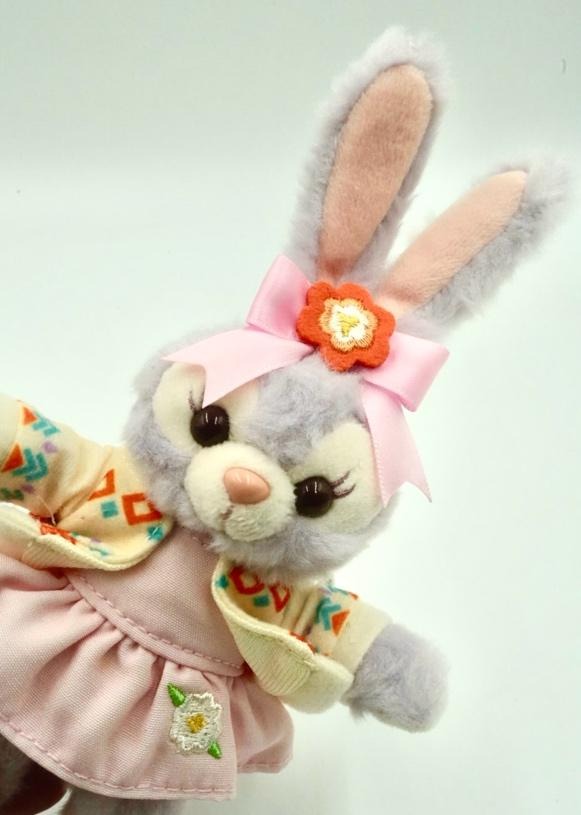
Needle pitch: Simply shrinking stitch length proportionally would make stitches look coarse at small scale, so pitch had to be recalculated, not scaled.
Embroidery density: The same pattern needed a full density recalculation when scaled down. Too sparse looks cheap; too dense goes stiff and loses softness.
Flip opening and closure placement: We moved turning openings and final closure points to positions that are structurally sturdier and visually more natural, preventing fold marks. This is a large part of why many small plush figures look fine at a glance but fall apart under close inspection.
3. Fabric selection is a stability problem, not just a softness one
The Duffy & Friends fur texture is meant to read as refined and clean, not exaggerated or overly fluffy. We evaluated fabric on two additional criteria beyond hand-feel:
Color consistency across multiple production batches
Resistance to pilling and whitening under repeated handling and play
This mattered most for the light and pastel-colored characters, where unstable base fabric can cause irreversible discoloration along the seams over time. Every fabric was qualified not just on how it felt in the first sample, but on how consistently it would perform across a 100,000-unit production run and years of real-world handling.
4. Clothing is the highest-stakes part of the build
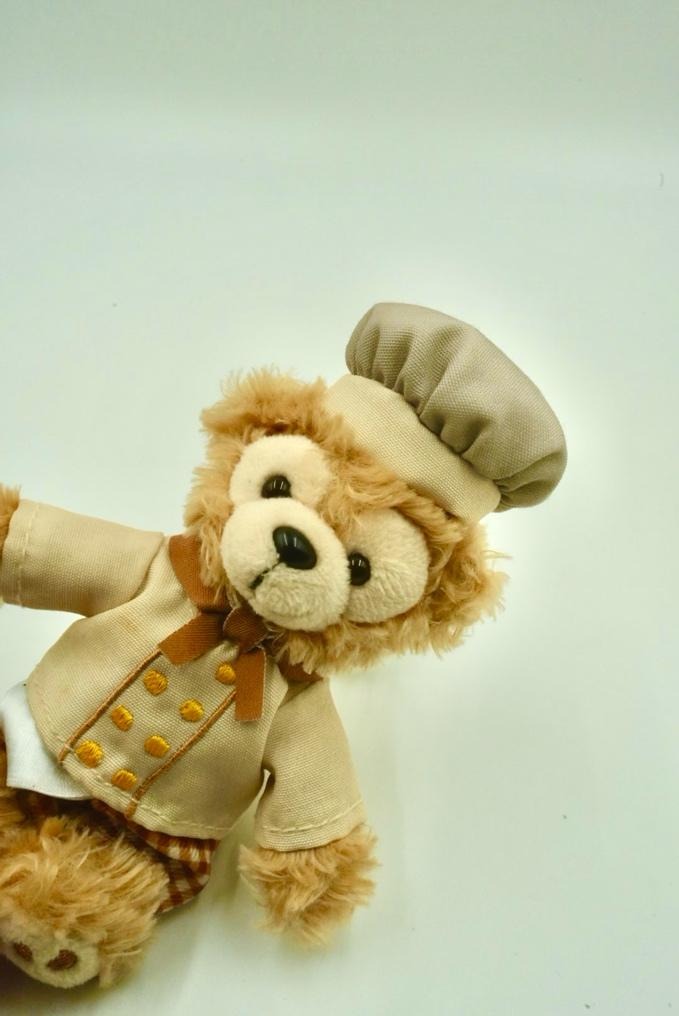
The hardest part of the Duffy & Friends line is the clothing: multiple layers, small patterns, dense decorative elements, and precise positioning. We locked in the "body-only" standard first — correct proportions and hand-feel — then reverse-engineered each clothing piece around that body. This sequencing prevents a common failure mode where small accessories (hats, bags, capes, bows) throw off the plush's posture during mass production.
5. Filling is zoned, not just stuffed
Duffy & Friends has specific hand-feel requirements: the body needs to feel solid, the limbs need to stay soft and floppy, and the head needs to sit upright without feeling stiff. We used a zoned filling approach:
Head: high rebound and shape retention
Body: stable structure
Limbs: softness and flexibility
The goal wasn't to get one plush to feel right — it was to keep all 100,000+ units within the same narrow hand-feel range.
Result
A100,000+ units produced and distributed to Hong Kong Disneyland
Bestseller status at Disney Store in 2024
Three reorders from The Walt Disney Company within 2024
Defect rate reduced from an elevated early-production level to under 2%, driven by the design complexity and detail work described above
Defect rates were high in the earliest runs due to the intricacy of the character detailing, but tightening the standards outlined above — proportional embroidery recalculation, zoned filling, and body-first clothing engineering — brought the rate down to under 2% by the end of the production cycle.
Character accuracy, cross-character harmony, and detail consistency all held up at scale, which is what drove the repeat orders. Even in the smallest, most clothing-heavy pieces, the finished units maintained a clean, consistent appearance — a factor the client cited as central to in-store display quality and repeat purchases.
What It Takes to Become a Disney-Approved Manufacturer
Producing a Disney-licensed product isn't just a matter of winning the order — a factory has to be formally authorized by Disney before it can legally manufacture, handle, or ship any Disney-branded merchandise. Kedonia holds this authorization, which is why we were eligible to take on the Duffy & Friends production run in the first place.
The core requirement is FAMA (Facility and Merchandise Authorization), the production authorization certificate issued by Disney. A factory cannot cut fabric, assemble, or ship a single Disney-branded unit without it. FAMA is granted only after a factory passes Disney's International Labor Standards (ILS) audit, which reviews labor rights and working conditions, workplace health and safety, environmental compliance, anti-terrorism and supply chain security procedures (aligned with CTPAT), and general business integrity and documentation practices.
Disney also accepts a set of equivalent third-party social compliance audits in place of its own ILS audit, including:
BSCI (Business Social Compliance Initiative)
SMETA (SEDEX Members Ethical Trade Audit)
ICTI CARE Program (International Council of Toy Industries)
SA8000 (Social Accountability 8000)
WRAP (Worldwide Responsible Accredited Production)
FLA (Fair Labor Association)
ETI (Ethical Trading Initiative)
EICC (Electronic Industry Citizenship Coalition)
Alongside FAMA and social compliance, plush manufacturers producing for Disney also typically carry product safety certifications required for the markets the toys ship into, such as ASTM F963 (US toy safety), EN71 (EU toy safety), and ISO 9001 (quality management). For the Duffy & Friends run, every proportion, color, expression, stitch, and label was produced against Disney's approved character bible and verified under this certification framework — which is part of why the defect rate was able to come down to under 2% at scale.
Conclusion
This wasn't a single order fulfilled — it was a repeatable manufacturing model built specifically for the Duffy & Friends character system, now serving as the template for new characters and clothing versions added to the line. The relationship with The Walt Disney Company has continued to grow from this foundation.
