Blog
Custom Plush Toy Sampling Process Explained
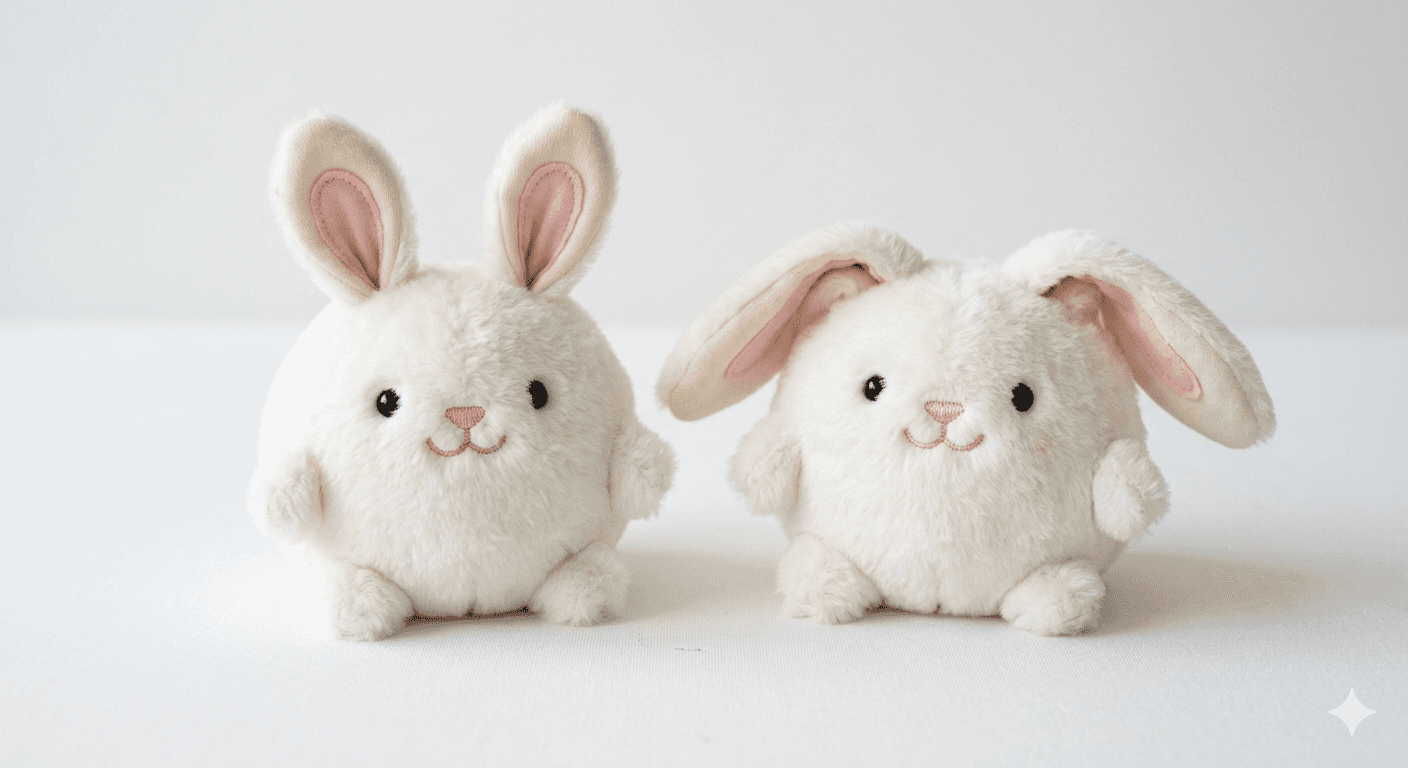
Custom Plush Toy Sampling Process Explained
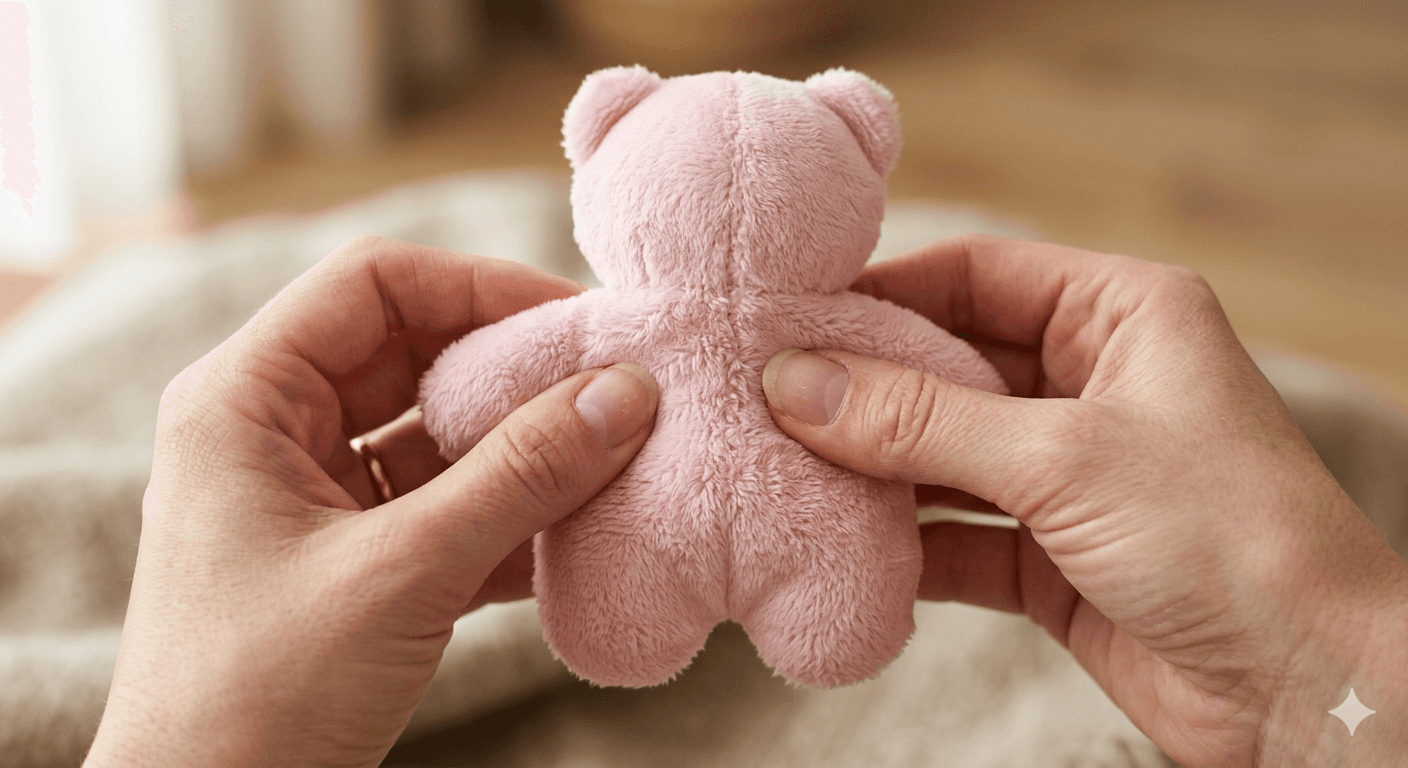
The sampling stage is the most important checkpoint in any custom plush toy production. It is the point in the process where your design stops being a reference image and becomes a physical object you can hold, evaluate, and approve before committing to bulk production.
Despite this, it is also the stage that brands and creators most often rush through, or misunderstand entirely. Some treat it as a formality and approve samples without a thorough review. Others are unclear about what the sample is actually supposed to tell them. Both approaches lead to the same outcome: a bulk order that does not match expectations.
This guide explains exactly what the custom plush sampling process involves, what you receive, what you need to check, when to approve and when to request changes, and how the sample connects to the bulk production run that follows.
Kedonia has produced over one million custom plush toys for clients including Disney, Swarovski, SoftBank, and Walmart. Every single order, regardless of volume, goes through a physical sampling stage before mass production begins.
To see what your design could look like before paying for a sample, upload your sketch at kedonia.com/ai and receive a realistic plush preview in under two minutes.
WHAT IS A CUSTOM PLUSH SAMPLE?
A custom plush sample, also referred to as a prototype, is a fully finished physical version of your plush toy produced before bulk manufacturing begins. It is sewn from the same fabric types that will be used in production, stuffed to the intended density, and detailed with the embroidery and surface features specified in your brief.
It is not a rough approximation or a mockup. The sample is intended to be production-representative, meaning it is produced using the same pattern, materials, and construction methods that will be used for every unit in your bulk order. When you approve the sample, that approved unit becomes the binding quality standard for mass production. Every item produced in your bulk order is inspected against that standard before shipment.
This is why the sampling stage deserves more attention than it typically receives. The sample is not a step on the way to the real product. The sample is the real product, made once, so that every subsequent unit can be made correctly.
HOW MUCH DOES A PLUSH TOY SAMPLE COST?
At Kedonia, the sample costs US$200. This is a fixed cost regardless of design complexity, size, or material selection. It covers the pattern-making, materials, and skilled labour required to produce the first physical prototype.
This cost is separate from bulk production pricing. It is not a deposit that offsets your order total. It is the cost of the prototype itself.
If revisions are required after you review the sample, Kedonia will produce a revised sample. Depending on the extent of the changes requested, additional sample rounds may carry a cost. Providing a thorough and precise brief at the outset, and reviewing the AI-generated design concept at kedonia.com/ai before committing to a physical sample, reduces the likelihood of needing multiple rounds.
HOW LONG DOES PLUSH TOY SAMPLING TAKE?
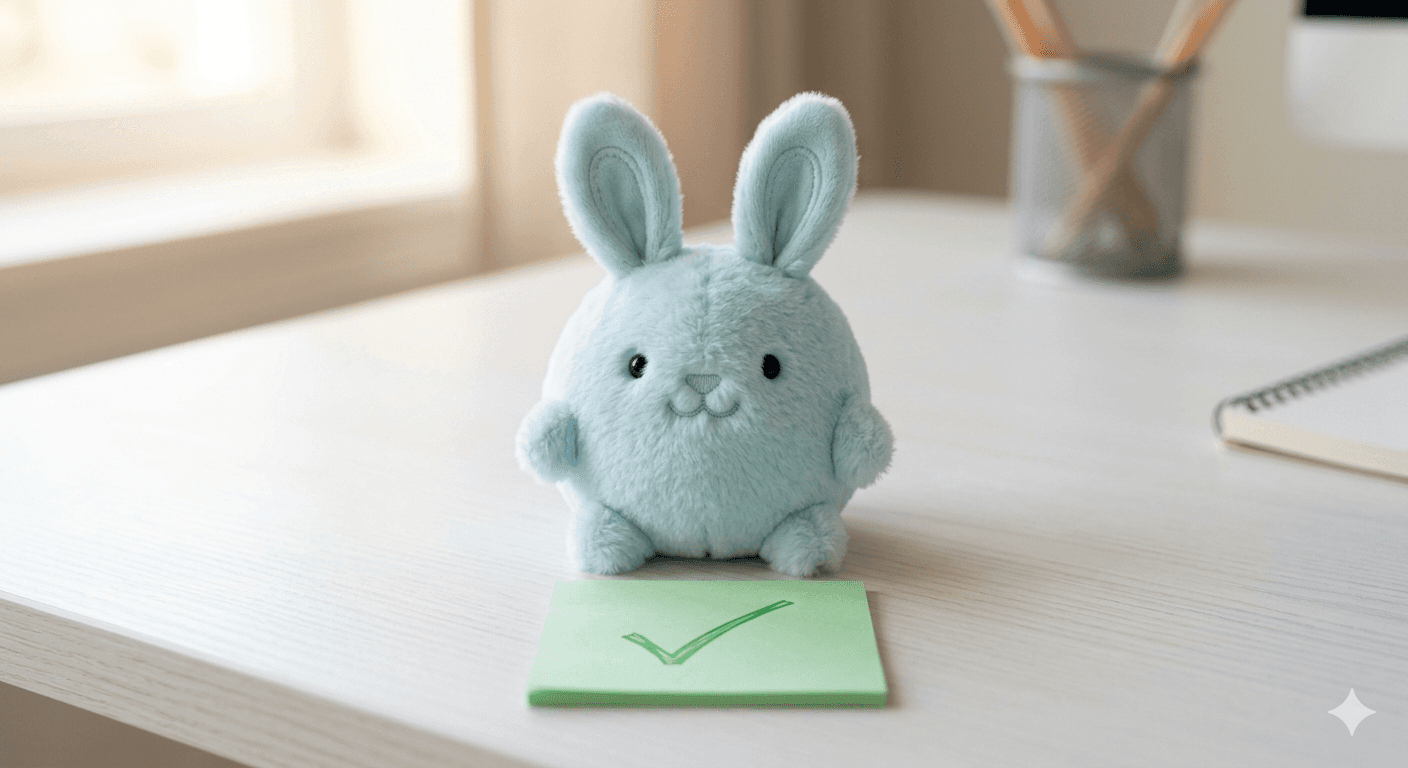
Prototype production at Kedonia takes approximately five days from the point at which the design brief is confirmed and sampling is authorised.
This five-day window covers pattern finalisation, fabric preparation, cutting, sewing, stuffing, and any embroidery or surface detailing specified in the brief. It does not include transit time if the sample is being shipped to you for physical review.
If you request revisions after reviewing the first sample, each additional round takes a similar timeframe. Planning for at least one revision round, and ideally building ten to fourteen days of review buffer into your overall project timeline, keeps the production schedule on track without pressure to approve a sample that is not quite right.
WHAT DOES THE SAMPLING PROCESS LOOK LIKE STEP BY STEP?
Brief Confirmation
Before a sample is produced, the design brief needs to be clear enough for the manufacturer to work from without making assumptions. This means multiple angle references of the design, precise colour specifications, confirmed dimensions, and clear notes on any features that require special attention.
Once the brief is submitted, Kedonia's team reviews it and raises any clarifying questions before beginning work. Getting these answers right at this stage prevents misunderstandings from being built into the prototype.
Pattern Making
The manufacturer creates a paper pattern, a set of flat fabric templates that map out every panel of the plush toy. These panels, when cut, sewn together, and stuffed, produce the three-dimensional form of the finished toy.
Pattern-making is where the translation from 2D brief to 3D object happens. An experienced pattern-maker accounts for seam allowances, stuffing expansion, and the way different fabric types behave under tension. This technical expertise is what separates a sample that closely matches the brief from one that requires multiple rounds of correction.
Fabric Cutting and Preparation
Once the pattern is finalised, the fabric panels are cut. At Kedonia, laser cutting machines are used for precision. The cut panels are then prepared alongside any additional materials, embroidery threads, stuffing, hardware such as safety eyes, and any surface detailing components.
Sewing, Stuffing, and Detailing
The panels are sewn together by skilled production staff. The toy is then stuffed to the specified density, closed, and finished with any embroidery or applied details. The completed prototype is inspected internally before being presented for customer review.
Customer Review and Feedback
You receive the sample, either physically or via detailed photographs depending on your preference and location, and conduct your review. This is your opportunity to evaluate the prototype against your brief in full detail.
Revision or Approval
If the sample meets your specifications, you formally approve it and bulk production begins. If adjustments are needed, you provide detailed feedback and the manufacturer produces a revised sample. This cycle continues until the sample is approved.
The approved sample is then retained as the production master. Every unit in your bulk order is benchmarked against it during quality control.
WHAT TO CHECK WHEN YOU RECEIVE YOUR SAMPLE
This is the stage where many brands and creators underinvest attention. A thorough sample review is not just about whether the toy looks roughly right. It is about confirming every dimension of quality before those dimensions are locked in at scale.
Overall Proportions and Silhouette
Hold the sample at arm's length and compare it to your design reference. Does the overall shape read as intended? Are the proportions between the head, body, and limbs correct? Does the character or object have the visual weight and personality you designed it to have?
Proportional issues are significantly easier to correct at the sample stage than to live with across a full production run. If something is off, describe it specifically. "The head appears too large relative to the body" is actionable feedback. "It does not look quite right" is not.
Fabric Feel and Texture
Handle the sample and assess the fabric feel against your expectation. Is the texture what you wanted? Is the pile length and density appropriate for your design? Does the fabric feel premium enough for your intended price point and use case?
If the feel is not right, this is the time to discuss alternative fabric options. Changing fabric after bulk production begins is not possible.
Stuffing Density and Firmness
Squeeze and handle the sample to assess the stuffing. Is it the right firmness? A toy that is overstuffed feels rigid and loses the huggable quality that makes plush appealing. A toy that is understuffed feels limp and cheap. The stuffing density needs to be right for both the tactile experience and the visual form, because underfilling causes the silhouette to lose its intended shape.
Colour Accuracy
Compare the sample colours to your Pantone codes or physical swatches under consistent lighting. Fabric dye and embroidery thread colours can shift between reference and production depending on the base fabric. If there is a discrepancy, note it precisely with reference codes and request correction in the next round.
Embroidery and Surface Detail
Examine all embroidery under close inspection. The thread density should be consistent and the tension even. Embroidery that is too dense makes the fabric stiff and affects the feel of the finished toy. Embroidery that is too loose can look unfinished and is more susceptible to snagging. Check placement, sizing, and line quality against your reference.
Seam Quality and Closure
Check all seams across the toy. They should be straight, consistent in width, and without visible gaps or puckering. Pay particular attention to the closure seam, the point where the toy is sewn shut after stuffing. On well-made plush, this seam is positioned in a low-visibility area and finished to be as unobtrusive as possible.
Overall Finish
Check the entire surface of the toy for any staining, loose threads, matted pile, or anomalies in the fabric. The sample should arrive in the same condition as a product you would be comfortable shipping to a customer.
WHEN TO APPROVE AND WHEN TO REQUEST CHANGES
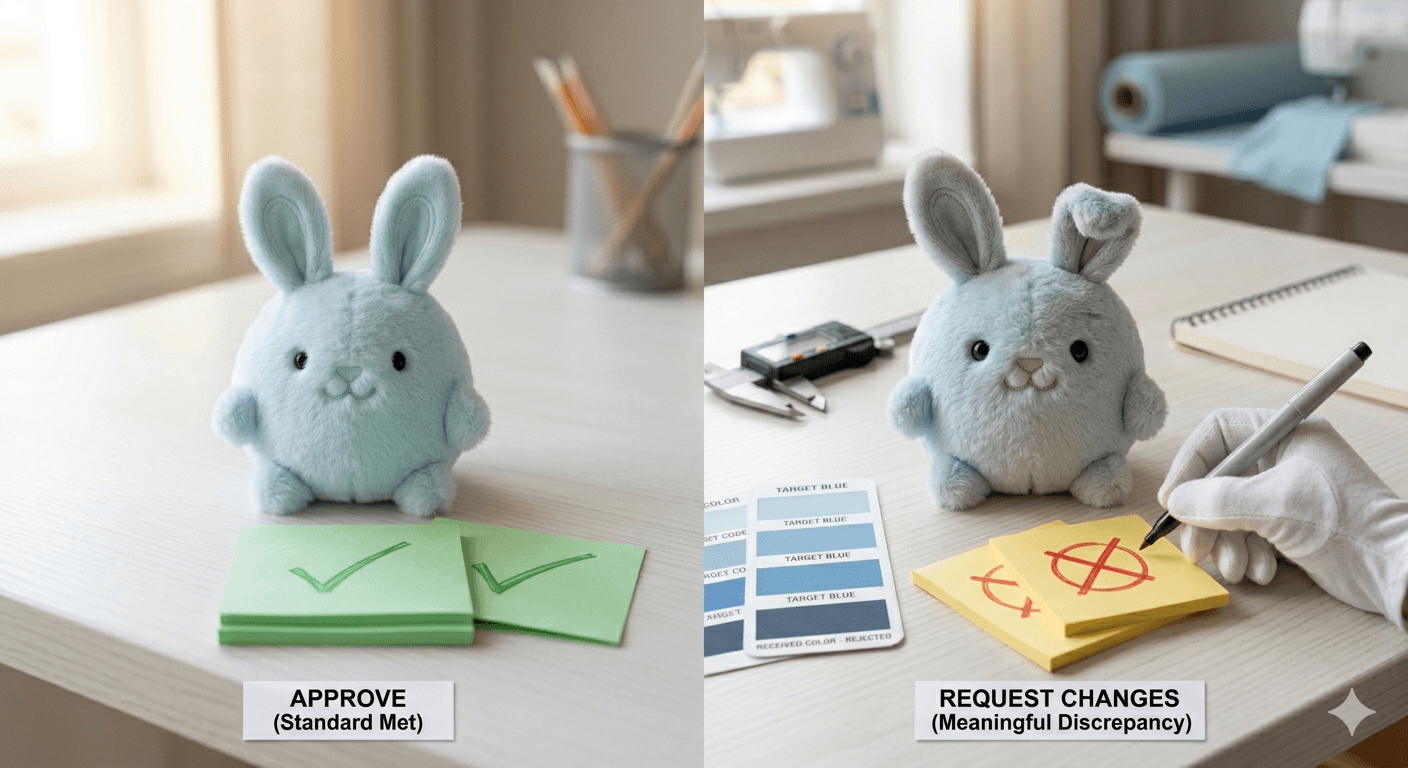
Approve the sample when it matches your brief across all of the dimensions above, or when any remaining differences are within acceptable tolerance. You do not need a perfect match in every pixel. You need a product you would be proud to put your brand or name on, in the hands of your customers, at scale.
Request changes when there is a meaningful discrepancy between the sample and your brief that would affect the perceived quality or accuracy of the finished product. Be specific in your feedback. The more precisely you describe what needs to change and why, the faster the revision cycle moves.
A common mistake is approving a sample with reservations, telling yourself you will address the issue in the next order. Once you approve a sample, that standard is locked in for your bulk production. What you accept in the sample is what you receive multiplied by your order quantity.
HOW THE SAMPLE CONNECTS TO BULK PRODUCTION
When you formally approve your sample, the manufacturer locks in the full production specification based on that approved unit. This includes the precise fabric rolls used, the confirmed stuffing weight range per size, the embroidery settings, the seam positioning, and the closure method.
Every item produced in your bulk order is inspected against the approved sample during quality control before it is cleared for packaging and shipment. At Kedonia, this inspection covers overall form and proportions, seam security, surface finish, colour consistency, and the absence of any unwanted components.
The approved sample is your quality guarantee. It is the reason the sampling stage deserves thorough attention rather than a rushed sign-off.
START YOUR SAMPLE WITH KEDONIA
If you are ready to begin the sampling process, the fastest starting point is uploading your design at kedonia.com/ai to generate a realistic plush preview, then submitting your brief for review and quotation.
Full details of our sampling process, timeline, and pricing are at kedonia.com/process-and-pricing. For direct enquiries, contact hello@kedonia.com.
