Blog
Custom Plush Manufacturing Process: From Sketch to Shipment
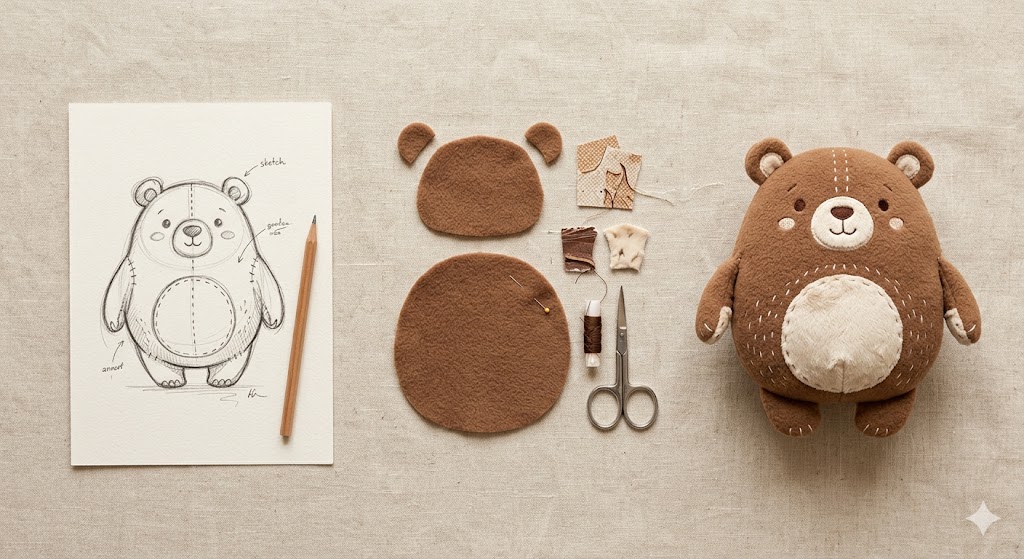
Custom Plush Manufacturing Process: From Sketch to Shipment
Understanding the custom plush toy manufacturing process before you place an order is one of the most valuable things you can do as a brand, creator, or merchandise buyer. It helps you set realistic timelines, prepare the right design materials, avoid the most common production mistakes, and know exactly what to expect at every milestone from first submission to products in your hands.
At Kedonia, the entire process from design submission to delivery is structured around a clear, 30-day production timeline. Every stage has a defined milestone, a specific output, and a clear handoff to the next phase. This guide walks through each stage in detail so you know exactly what happens, what you need to provide, and what you will receive at every point.
Kedonia has manufactured over one million custom plush toys for brands including Disney, Swarovski, SoftBank, and Walmart. This guide reflects how that process actually works.
If you want to see what your design could look like before committing to anything, upload a sketch at kedonia.com/ai and receive a realistic plush concept in under two minutes.
THE KEDONIA PROCESS: DAY 1 TO DAY 30
Kedonia's manufacturing process follows four defined milestones. Each one is a real checkpoint, not an approximation. Here is what happens at each stage.
DAY 1: DESIGN SUBMISSION
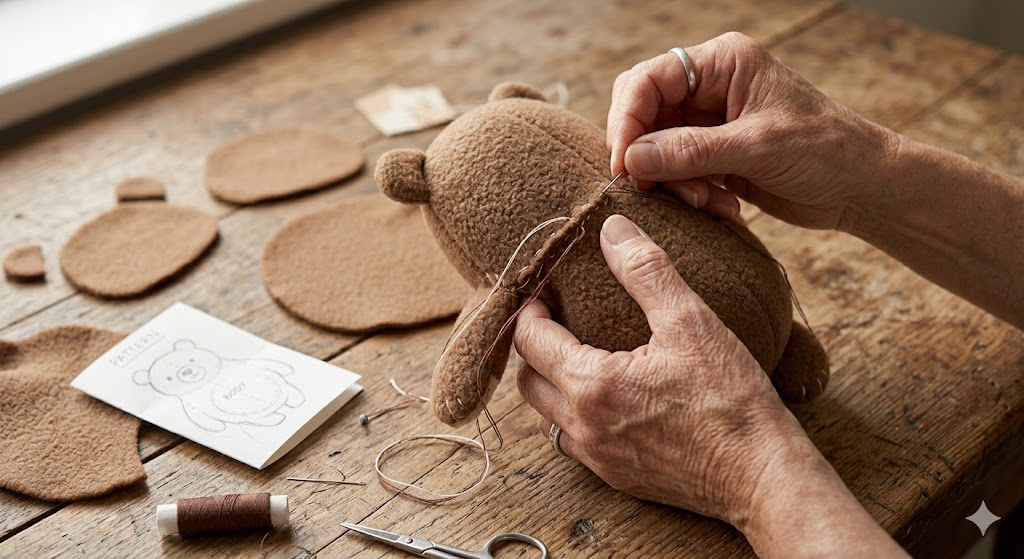
The process begins when you upload your design files and specifications. Your dedicated Kedonia ambassador reviews the submission, confirms dimensions within three days, and presents a first-look plush sample within five days of submission.
What you need to provide at this stage matters enormously. The more complete and precise your submission, the faster and more accurately the team can move from your design into a production-ready pattern.
What to Upload
Upload high-quality design files showing a clear front-facing view of your character or object as the minimum. Include additional angles where you have them, back view, side views, and close-ups of any distinctive features. More angles mean fewer assumptions at the pattern-making stage, which means a more accurate first sample.
Your design does not need to be a finished professional illustration. A clear sketch, a phone doodle, a digital concept, or a reference photograph all work as starting points. If you want to see your rough idea as a realistic plush concept before submitting, use Kedonia's AI tool at kedonia.com/ai. The AI converts any uploaded image into a plush concept in under two minutes, giving you a strong visual reference to include in your submission.
What to Specify
Along with your design files, specify the following in your submission. The overall height and width of the finished plush, along with precise measurements for distinctive features such as ears, arms, legs, and any accessories. The fabric type you prefer, minky, velboa, fleece, or sherpa, and the pile length if you have a preference. Colour references as Pantone codes, HEX values, RGB values, or CMYK values rather than general colour names. "Blue" is not sufficient. Specify something like Pantone 2925 C or HEX 0055A4 to ensure exact matching during production. Whether surface detailing should use embroidery or printed fabric, and the exact thread colours for stitching and accents. The target age grading if your product is intended for children, for example 3+ or 0 to 3 years, as this determines the applicable safety standards from the outset.
There are also things to avoid at this stage. Do not submit reference images or design assets that you do not own or have full legal rights to use. Any IP infringement in submitted designs places liability entirely with the creator. Do not use vague colour descriptions. Do not include ultra-thin elements, sharp points, or tiny accessories that are below one centimetre in size, as these are difficult to sew accurately, frequently fail quality checks, and can create safety compliance issues.
For a full list of design dos and don'ts, see kedonia.com/process-and-pricing.
DAY 5: SAMPLE REVIEW
By Day 5, Kedonia presents your first-look physical sample for review. This is a fully finished prototype of your plush toy, sewn, stuffed, and detailed to match your submitted specifications.
Two rounds of refinement are included for each customer. If you have feedback or want adjustments, the Kedonia team refines materials, stitching, proportions, stuffing firmness, or any other element you identify. After refinements are completed, the polished, production-ready final sample is delivered for your formal approval.
What to Check When You Receive Your Sample
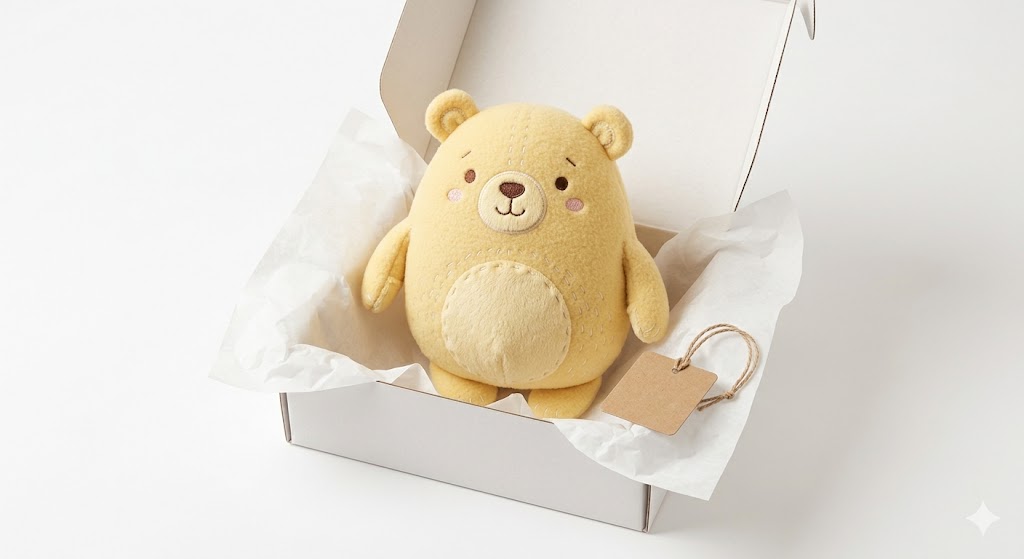
Review the sample carefully and thoroughly. The sample you approve becomes the binding quality standard for everything produced in bulk. What you accept at this stage is what gets manufactured at scale.
Check the overall proportions and silhouette against your design references. Check the fabric feel and confirm the texture matches your expectation. Check the stuffing density, whether the toy has the right firmness, not too hard and not too limp. Check colour accuracy against your Pantone codes or reference swatches. Check all embroidery and surface detailing for neatness, correct placement, and consistent density. Check seam quality across the entire toy including the closing seam. Check the overall surface finish for any staining, loose threads, or matted pile.
When to Request Refinements
Request refinements when there is a meaningful discrepancy between the sample and your brief. Be specific in your feedback. Describe exactly what needs to change and why. "The head appears disproportionately large relative to the body at the current stuffing density" is actionable. "It does not look quite right" is not.
Two refinement rounds are included. Making full use of them to get the sample right before approval is always the correct decision. Do not approve a sample with reservations. Do not make significant changes to major design elements after the final sample is approved, as this will delay production and may incur additional costs.
Once you formally approve the final sample, production begins.
DAY 20: MASS PRODUCTION
With your approved sample locked in as the quality standard, Kedonia launches full-scale production. The production stage covers fabric cutting, cloth printing and embroidery, sewing, cotton stuffing, quality control, and packaging. Each of these sub-stages happens in a defined sequence with specific quality checkpoints throughout.
Fabric Cutting
Kedonia creates a precise laser-cut fabric pattern with accurate measurements to confirm all dimensions. Laser cutting is used across production because it delivers the consistency and precision that manual cutting cannot reliably achieve at scale. Every panel cut from fabric matches the approved pattern exactly, which is foundational to maintaining consistent proportions across the entire production run.
Cloth Printing and Embroidery
Patterns, facial expressions, and surface details are printed or embroidered onto fabric according to your approved design. Embroidery density and thread tension are controlled carefully. Too high an embroidery density stiffens the fabric and affects the feel of the surrounding material. Too low a density looks unfinished. The settings confirmed at the sampling stage are applied consistently across the full production run.
Sewing
Fabric pieces are combined using a mix of hand sewing and machine sewing techniques. Seam quality is monitored throughout the sewing stage, not only at the end. This in-line approach identifies and corrects issues while they can still be addressed, rather than discovering them after the full batch has been produced.
Cotton Stuffing
Premium cotton is used to stuff each plush to the precise weight and density confirmed at the sample stage. Stuffing is the most technically demanding aspect of consistency at scale. A five percent increase in filling makes the toy feel hard. A five percent decrease causes it to feel limp. Kedonia manages this by setting a narrow weight range per size and checking the weight of each unit during production. The sequence and distribution of stuffing is controlled to maintain the intended form across the full surface of every toy.
Quality Check, Metal Detection, and Cleaning
Kedonia conducts thorough final inspections for consistency, safety, and quality. This includes metal detection to identify and reject any units containing unintended metallic components, which is particularly important for products entering children's markets. Every unit is inspected for correct form and proportions, secure seams, clean surface finish, colour consistency, and the security of any hardware components.
Packaging
Plush toys are packed according to your confirmed packaging specification. Individual polybags, custom boxes, hang tags, stickers, and eco-friendly options are all available. Packaging requirements should be specified at the design submission stage, not after production is complete, because packaging has its own lead time that runs in parallel to production. Leaving packaging undefined until the end is one of the most common causes of avoidable delays.
Allow for a natural manufacturing tolerance of plus or minus three to five percent in overall size, individual part measurements, and placement of details. This is a standard characteristic of handmade plush production across the industry.
DAY 30: DELIVERY
By Day 30 from sample confirmation, your products are ready to ship. You receive full tracking details and an estimated delivery window, with dedicated support from your Kedonia ambassador until your plushies arrive safely.
Kedonia ships globally. Logistics costs for mass production are subject to quotation based on destination and order volume. Logistics costs for sample delivery are approximately USD 60 to 80 per shipment to accessible regions.
KEDONIA'S PRICING STRUCTURE
Kedonia's pricing operates on an affordable, pay-as-you-scale model. Pricing tiers are structured around order quantity, with discounts increasing as volume grows.
The minimum order quantity is 500 pieces. At 1,000 pieces, a 20 percent discount applies relative to the MOQ rate. At 3,000 pieces, the discount is 26 percent. At 5,000 pieces, 29 percent. At 10,000 pieces, 35 percent. At 20,000 pieces, 37 percent.
The sample cost is USD 200 per design. This fee is refunded once your order exceeds 3,000 pieces.
Reference pricing for a standard 20cm plush with embroidered facial expression and non-customised cloth is USD 6.50 per unit at MOQ, with bulk pricing calculated from there. All prices are subject to the specific details of your design and order.
Full pricing details are at kedonia.com/process-and-pricing.
START YOUR PROJECT
The fastest starting point is uploading your sketch at kedonia.com/ai to generate a realistic plush concept in under two minutes. Use that concept as the anchor for your design submission and start the 30-day process from there.
For full process and pricing details, visit kedonia.com/process-and-pricing. For direct enquiries, contact hello@kedonia.com.
